Biography

Hildreth, Richard

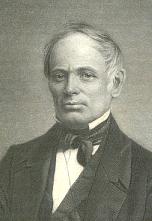
Richard HildrethRichard Hildreth (June 28, 1807-July 11, 1865) was a journalist, philosopher, historian, and antislavery activist. His 1836 novel The Slave is considered the first American antislavery novel. His History of the United States of America broke new ground with its “warts and all” portrayal of the founders of the American republic.…
Hildreth, Richard Read More »

The Russell Family

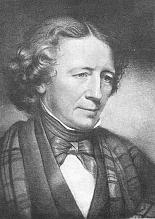
Lady Frances Russell, who became a Unitarian at 70, and her grandson, Bertrand Russell, Unitarian until age 15, were members of a British family long prominent in reform politics. Although Lady Frances’s husband, Lord John Russell, was never a Unitarian, from 1859-73 he regularly attended the preaching of James Martineau and, in his Whig (Liberal) political career, he had a considerable impact on the history of Unitarianism in Britain.…

The Russell Family Read More »

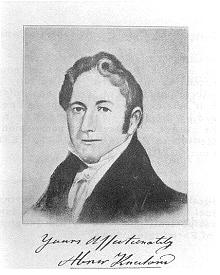
Kneeland, Abner

Kneeland
Abner Kneeland

Born in Gardner, Massachusetts, Abner was the sixth of ten children of Timothy and Moriah Stone Kneeland. His formal education stopped after a year in an academy in Chesterfield, New Hampshire. At the age of 21 Abner moved, with his older brother Asa, to Dummerston, Vermont in order to follow their father’s carpentry trade.

Kneeland, Abner Read More »

Stevenson, Adlai Ewing

Adlai Stevenson
Adlai Stevenson

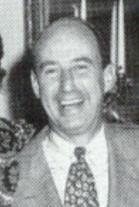
Adlai Ewing Stevenson (February 5, 1900-July 14, 1965), politician and diplomat, was twice the Democratic Party’s candidate for President of the United States. He brought a freshness, a depth, passion, wit and vision to American politics and to international diplomatic discourse, that illumined an era.

Stevenson, Adlai Ewing Read More »

Ripley, Ezra

Ezra Ripley (May 1, 1751-September 21, 1841) served as minister of the First Parish in Concord, Massachusetts for almost 63 years. Although not himself an intellectual, Ripley possessed extraordinary personal and spiritual authority. He, more than any other, created the religious and moral climate of this small town which nurtured far more than its share of the writers, artists, and political figures—whose names are synonymous with the flowering of the American Renaissance.…

Ripley, Ezra Read More »

Jenkins, Lydia Ann

Lydia Ann Moulton Jenkins (1824 or 1825-May 7, 1874) was a leader in the women’s rights movement, a Universalist minister, and later a homeopathic physician. It has been claimed that she was the first woman to be granted ministerial fellowship in the United States, and perhaps the first to be ordained with full denominational authority.…

Jenkins, Lydia Ann Read More »

Ripley, Samuel and Sarah

Samuel Ripley (March 11, 1783-November 24, 1847) and Sarah Alden Bradford Ripley (July 31, 1793-July 26, 1867) played significant roles in the Unitarian movement, especially through their close connection with the Emerson family. Although the Ripleys were intimates of Ralph Waldo Emerson and friends of Boston area Unitarian ministers and transcendentalists, notice of them has been largely confined to mention in works of their better known associates.…

Ripley, Samuel and Sarah Read More »

Streeter, Adams

Adams Streeter (December 31, 1735-September 2, 1786) was the first minister of the Universalist congregations in Oxford and Milford, Massachusetts, societies at the heart of the indigenous origin of New England Universalism. According to the History of the Town of Oxford, Massachusetts, Streeter was the “chief agent in establishing the denomination.”

Streeter, Adams Read More »

Ballou, Adin

Adin Ballou
Adin Ballou

Adin Ballou (April 23, 1803-August 5, 1890), founder of the utopian community at Hopedale, Massachusetts and a leading 19th century exponent of pacifism, was during his long career a Universalist, a Restorationist, a Practical Christian, and a Unitarian minister.

Ballou, Adin Read More »

Safford, Mary Augusta

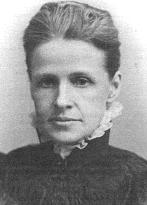
Mary August SaffordMary Augusta Safford (December 23, 1851-October 25, 1927), a Unitarian minister of remarkable energy, zeal and dedication, did much to plant and promote the growth of Unitarian churches in the middle west during the late 19th century. The central figure in a cadre of women Unitarian ministers known alternately as the “Iowa Sisterhood” or the “Iowa Band,” she led her ministerial colleagues in their common work of founding and serving new Unitarian churches in Iowa, Illinois, Minnesota, and North and South Dakota.…
Safford, Mary Augusta Read More »

Mann, Horace

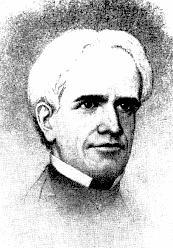
Horace Mann
Horace Mann

Horace Mann (May 4, 1796-August 2, 1859), was an educator and a statesman who greatly advanced the cause of universal, free, non-sectarian public schools. Mann also advocated temperance, abolition, hospitals for the mentally ill, and women’s rights. His preferred cause was education, about which he remarked that while “other reforms are remedial; education is preventative.”

Mann, Horace Read More »

Clapp, Theodore

Theodore ClappTheodore Clapp (March 29, 1792-May 17, 1866), an early Unitarian preacher in the southern United States who established an outpost of liberal religion in New Orleans and built it into a beacon of religious moderation, was born in Easthampton, Massachusetts. His childhood memories, he wrote, were laced with the pain he felt at the Calvinist preaching he heard about God’s “hatred of man.”…

Clapp, Theodore Read More »