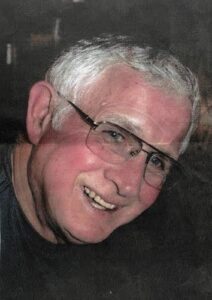
 David Oran Rankin (June 10, 1937–April 5, 2024) was one of the most eloquent and influential Unitarian Universalist ministers of the late 20th century, serving congregations in Watertown and New Bedford, Massachusetts; San Francisco, Atlanta, and Grand Rapids, Michigan. Rankin sometimes described himself as a “Christian anarchist.” Rev. Diane Miller, who worked with him at the San Francisco church, characterized his ministry as a blend of contrasts:
You combine the manner of a humble cleric
with the worldly sophistication of an urban scholar.
You have the work ethic of a nineteenth century Calvinist
along with the zany playfulness of the Marx brothers.
You practice the discipline of daily meditation
and emerge full of the renegade ideas of a free thinker.
You hold to Christian Faith
but let go of self-righteous pieties.
You have an inviolate sense of privacy,
yet reveal from the pulpit the deeply personal core of your life.
You espouse the ideals of faith and the religious tradition,
fully understanding human frailty.
You are biting and harsh in your condemnation of the evils of our time,
while compassionate in your dealings with every human being.
David was the middle son of three boys born to Oran Foster Rankin and Reba George Rankin. He was raised in McKeesport, Pennsylvania. His father was a steelworker. The family attended a Presbyterian church. As a boy he loved the movies (the Marx Brothers and the Lone Ranger), and all-weather street basketball, as well as running and swimming. In high school, he was student council president and played basketball on the 1955 state championship team. At Westminster College in New Wilmington, PA, he majored in political science and history, wrote for the college paper, captained the basketball team, and met Virginia Ann Minor, later known as Ginger, who became his wife of 65 years. Together they drove across country to Moscow, Idaho, where David began graduate studies in political science. After receiving his University of Idaho M.A. in 1961, he taught political science at Cornell College in Mt. Vernon, Iowa. He was also associate editor of the North American Review, writing a column, “The Anarchist Dictionary.”
Becoming convinced that solutions to social problems could only be found in the spiritual realm, he enrolled at the Universalist-sponsored Crane Theological School of Tufts University, receiving his ministerial degree there in 1965. His first training ministry was at the First Parish in Dorchester, MA, gathered in 1629. He was ordained on November 27, 1966, at the First Parish in Watertown, MA, gathered in 1630. That church was then close to closing. Rankin called on people door-to-door. During his three-year tenure, the membership tripled. He helped to found a Fair Housing Committee, and both counseled and harbored conscientious objectors to the Vietnam war.
In 1969, he accepted a call from the First Unitarian Church in New Bedford, MA where he served four years. In addition to draft counseling and work with senior citizens, he took on issues of racial justice, including prison reform, a bail bond program, and a drug rehabilitation center in the basement of church. His sermon, “The Salvation of New Bedford,” won the UUA’s 1971 Clarence R. Skinner Award for the best sermon exemplifying a philosophy of social justice.
From 1973 to 1979, he served the First Unitarian Universalist Society of San Francisco, CA. This involved ministering to many drawn to city after the 1967 “Summer of Love,” including a growing gay community. The congregation developed a Gay Caucus, paid off a burdensome debt on its building, and grew in numbers, even during a time marked by considerable social tension and even violence in the city. The Rankins were raising three children in a city where the education and safety of children was not a high priority. In late 1978, just as the Jonestown massacre and the assassinations of Mayor Moscone and Supervisor Harvey Milk shocked San Francisco, he accepted a call to the Unitarian Universalist Congregation of Atlanta, Georgia.
During his tenure there, from 1979 to 1982, he took part in civil and gay/lesbian rights marches along Auburn Avenue and helped raise funds to purchase “The Mountain,” a UU retreat in Highlands, North Carolina. He taught a summer course there on “Theology Through Biography.” In 1983, Starr King School for the Ministry made him an honorary Doctor of Sacred Theology.
That year he accepted a call to the Fountain Street Church in Grand Rapids, Michigan – a large independent liberal congregation that for thirty-five years had been led by Dr. Duncan Littlefair, who continued as Minister Emeritus. There too Rankin conducted a ministry that was both civic in its broad social concerns and profoundly pastoral. His parishioners there remembered both:
“He was a gentle poet who uplifted all who came in contact with him with a respect for what love and caring can add to life.
David walked beside us through the valley, always with hope for a better world. His kindness and gentle passions brightened our lives and led us to change.”
His succinct summary of religious liberalism, “Ten Things Commonly Believed Among Us,” marked by his ability to phrase matters memorably, became a UUA wallet card, both widely distributed and widely quoted:
- We believe in the freedom of religious expression. All individuals should be encouraged to develop a personal theology, and to openly present their religious opinions without fear of censure or reprisal.
- We believe in tolerance of religious ideas. The religions of every age and culture have something to teach those who listen.
- We believe in the authority of reason and conscience. The ultimate arbiter in religion is not a church, a document, or an official, but the personal choice and decision of the individual.
- We believe in the search for truth. With an open mind and heart, there is no end to the fruitful and exciting revelations that the human spirit can find.
- We believe in the unity of experience. There is no fundamental conflict between faith and knowledge; religion and the world; the sacred and the secular.
- We believe in the worth and dignity of each human being. All people on earth have an equal claim to life, liberty, and justice; no idea, ideal, or philosophy is superior to a single human life.
- We believe in the ethical application of religion. Inner grace and faith find completion in social and community involvement.
- We believe in the force of love, that the governing principle in human relationships is the principle of love, which seeks to help and heal; never to hurt or destroy.
- We believe in the necessity of the democratic process. Records are open to scrutiny, elections are open to members, and ideas are open to criticism, so that people might govern themselves.
- We believe in the importance of a religious community. Peers confirm and validate experience, and provide a critical platform, as well as a network of mutual support.
He retired in 1998, and he and Ginger settled in Moscow, Idaho. He had by then published two meditation manuals, Portraits from the Cross (1978) and Dancing in the Empty Spaces (2001) and three books drawn from sermons: So Great a Cloud of Witnesses (1978); Theology Through Humor; and My Ending is My Beginning; as well as many articles in various journals. An archive of his sermons at Fountain Street Church is maintained by that congregation.
Sources: John A. Buehrens, A Religious Center with a Civic Circumference: Unitarians in San Francisco Since 1850 (UUSF, 2022).
“Among the Cloud of Witnesses: David O. Rankin,” by Mark Harris, First Parish in Watertown, MA. https://fpwatertown.org/among-the-cloud-of-witnesses-david-o-rankin-by-mark-w-harris-february-10-2019/
Article by John A. Buehrens, January 2025